At Lund Fire Department, we believe that preparation saves lives—no matter the season. Cold weather doesn’t deter our training; we simply take it indoors and keep the skills sharp. Our recent hands-on session focused on essential firefighter survival and rescue techniques, ensuring every member is ready for the toughest scenarios. This training covered Rapid Intervention Team (RIT) pack deployment, SCBA operations, air compressor and fill station safety, air pack handling, and breaching walls for emergency egress.
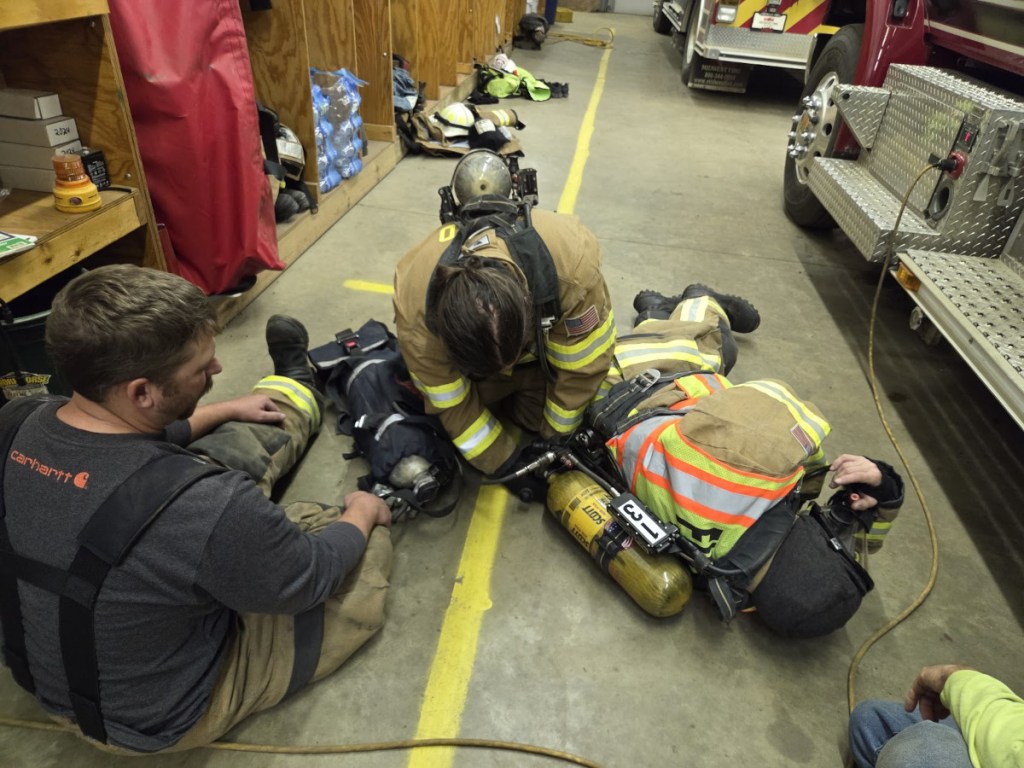
RIT Pack Deployment
The Rapid Intervention Team (RIT) Pack is a specialized rescue tool designed to provide emergency air supply to a downed or trapped firefighter. It’s essentially a portable life-support system that can be deployed quickly during a Mayday situation.
Our team practiced:
- Locating and deploying the RIT pack quickly and efficiently.
- Connecting air supply to a downed firefighter’s SCBA for immediate life support.
- Executing rescue maneuvers in tight spaces.
SCBA Proficiency
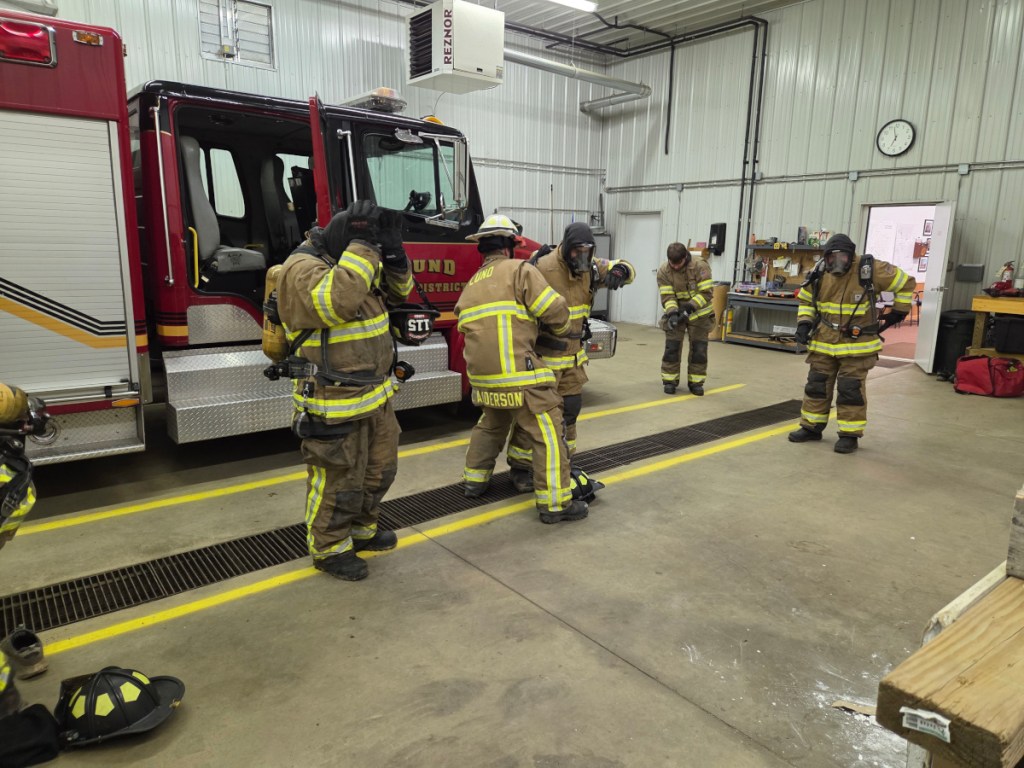
A Self-Contained Breathing Apparatus (SCBA) is one of the most critical pieces of equipment for a firefighter. It provides a portable supply of breathable air, allowing firefighters to operate safely in environments filled with smoke, toxic gases, or low oxygen levels.
SCBAs are critical for respiratory protection. Our training focused on:
- Donning and doffing drills for speed and accuracy.
- Emergency bypass and troubleshooting techniques for malfunction scenarios.
- Air management strategies, including calculating remaining time under stress.
Air Compressor and Fill Station Safety
In order to keep the those air cylinders full we rely on an air compressor and fill station.
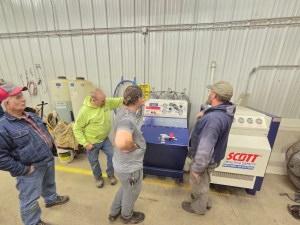
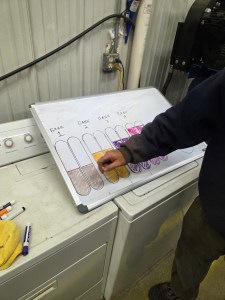
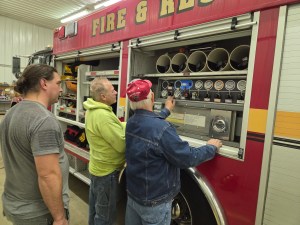
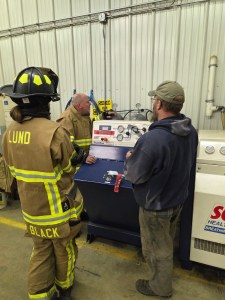
What is an Air Compressor and Fill Station?
- Air Compressor: A high-pressure system that compresses clean, breathable air into SCBA cylinders.
- Fill Station: A secure enclosure where cylinders are placed during filling to protect firefighters from accidental rupture or failure.
Ensuring SCBAs are always ready for the next call with reliable air supply is non-negotiable. In our training we reviewed:
- Cylinder Refills After Training or Calls: Every SCBA cylinder used during drills or emergencies is refilled immediately.
- Pressure Checks and Maintenance: We monitor gauges and inspect cylinders for damage before filling.
- Controlled Fill Procedures: Cylinders are filled slowly to prevent overheating and maintain structural integrity.
- Rapid deployment techniques for high-pressure situations.
- Air sharing exercises to simulate real-world emergencies.
- Inspection routines to ensure gear integrity before entering hazardous environments.
Breaching a Wall
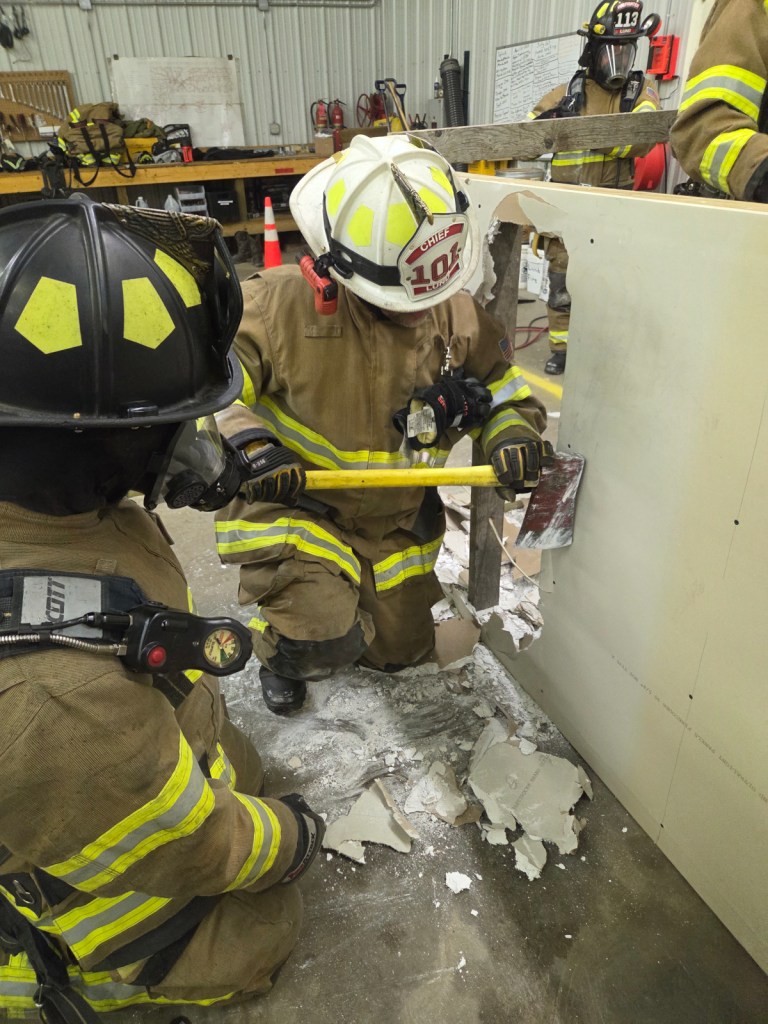
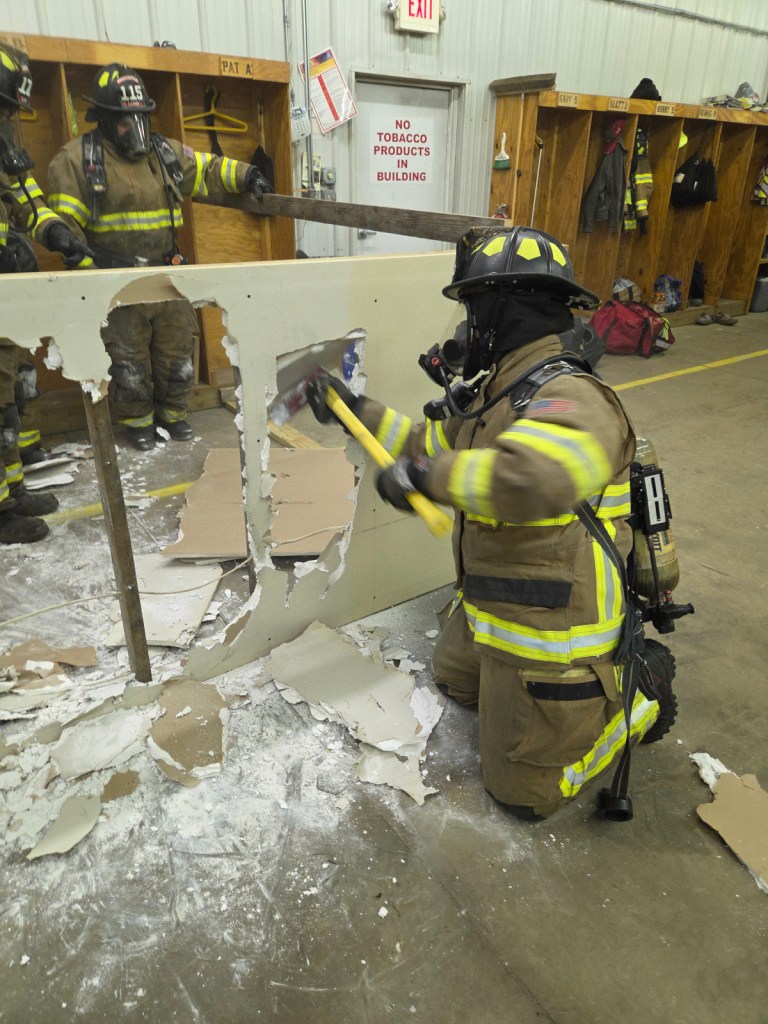
Sometimes survival means creating your own exit. Our wall breach training covered:
- Tool selection and usage for different wall types.
- Egress techniques for navigating tight passages.
- Escape route planning under zero-visibility conditions.
Why This Training Matters
Every second counts on the fireground. By mastering these skills, Lund Fire Department ensures that every firefighter is prepared to protect themselves, their team, and the community—rain, snow, or shine.
About the Lund Fire District: The Lund Fire Department is a volunteer fire department dedicated to protecting the residents of Pepin Township, Maiden Rock Township, Stockholm Township and the Village of Stockholm. With a team of highly trained professionals, the department offers fire protection, rescue services, and emergency medical response support. The department is committed to community outreach and education, ensuring that everyone has the knowledge and resources to stay safe.
About the Lund Fire Fund: The Lund Fire Fund was established to address the growing needs of the all-volunteer Lund Fire District. Our mission is to assist local fire fighters and emergency response teams in the Lund Fire District by providing essential equipment, advanced training, and other critical resources that they require to respond to emergencies swiftly and efficiently.
You can donate to our cause by using our donation page or contacting us directly.
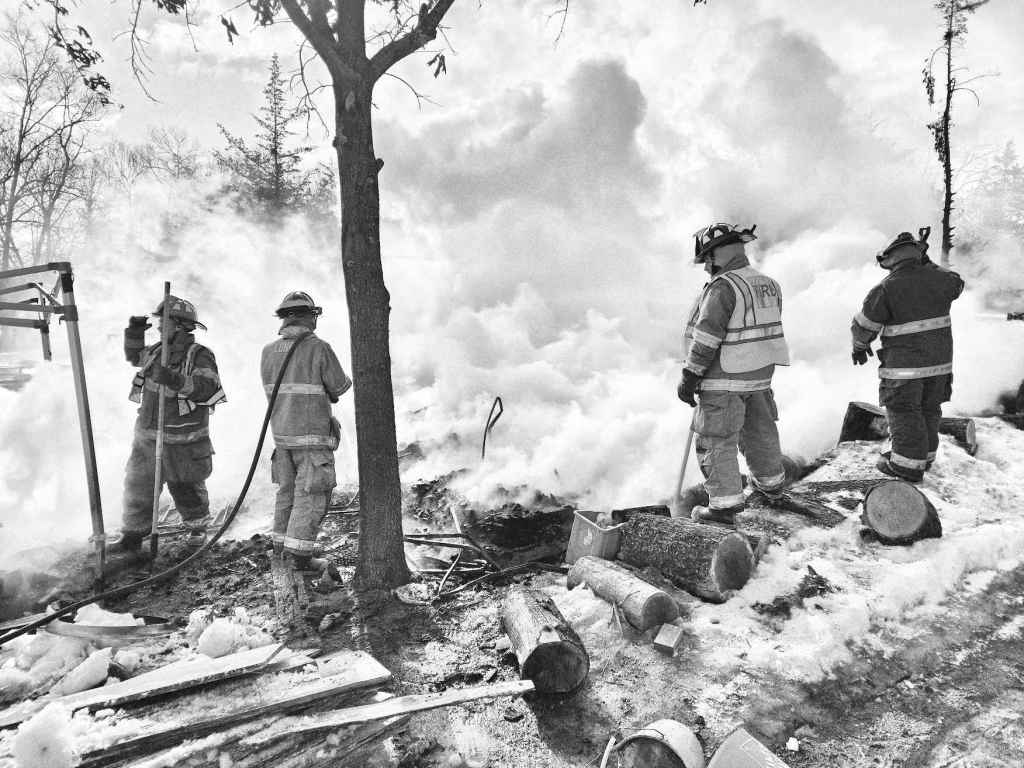
Your donation can now be a tax-deductible gift. Every contribution, no matter the size, makes a significant impact on the safety of our community.
 Lund Fire District